
Fire alarm monitoring
One company for the system. A third party for the signals.
Monitoring for commercial fire alarm systems, arranged through Moro Cojo. We program the panel and the communicator that sends its signals, and a third-party central monitoring station receives them.
After-hours service available. For an active fire or an unsafe condition, call 911.
How it works
Where a signal goes after it leaves your panel.
Monitoring is a short chain of specific parties, each doing one thing. Here is the part of it that runs through us, in order.
Signal path
You work through Moro Cojo
Monitoring is arranged through Moro Cojo, so one company handles the fire alarm system and its monitoring.
Moro Cojo programs the system
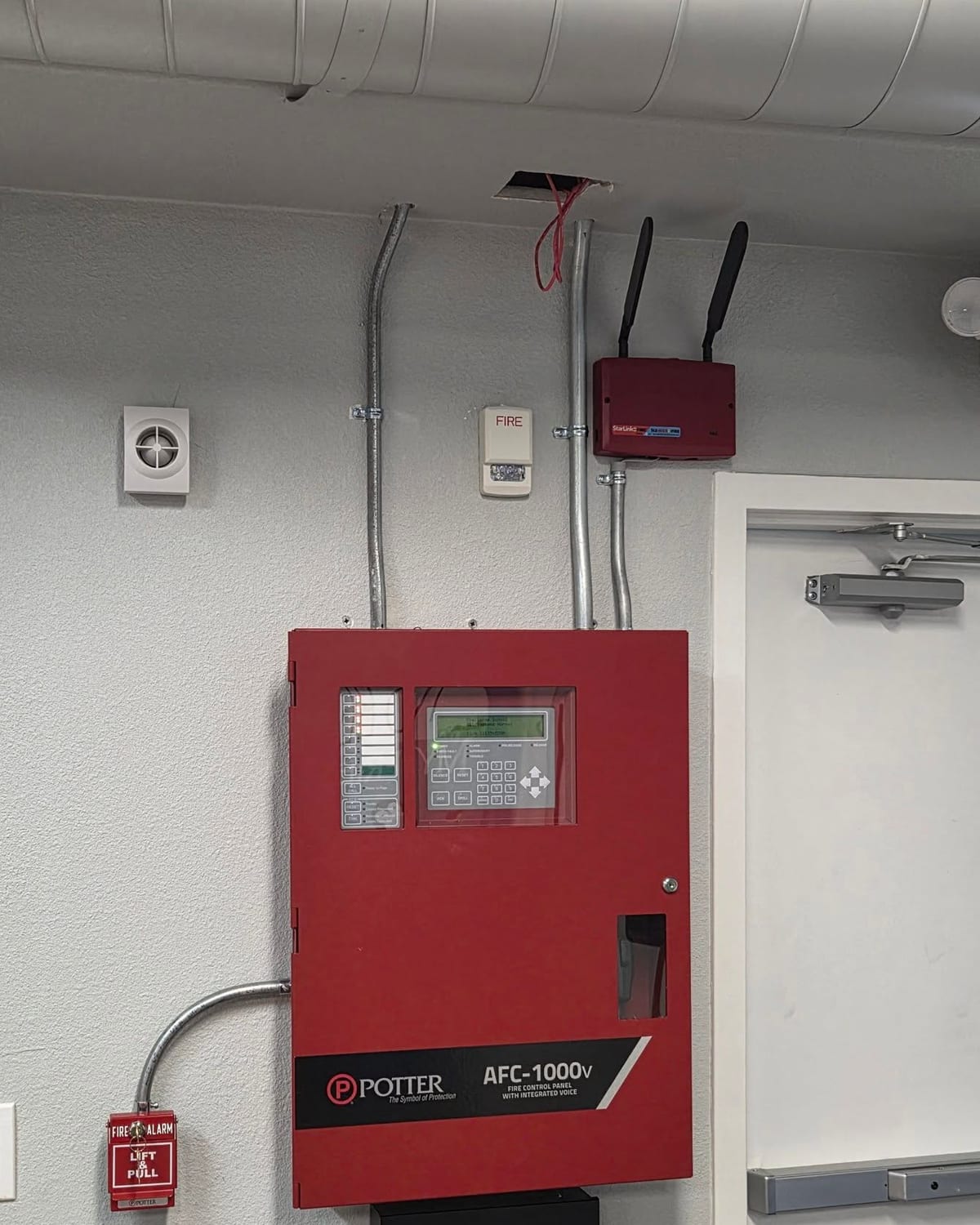
We program the fire alarm panel and the communicator that sends its signals.
The system sends its signals
The communicator transmits the system’s signals out of the building to the monitoring station.
A third-party central station receives them
A third-party central monitoring station receives the signals. Moro Cojo does not own or staff that station.
The station makes the calls
The central station contacts Moro Cojo and the contacts you have designated for the building. What else it does with a given signal is set by the monitoring arrangement for your building.
Plain definition
Monitoring is how a signal leaves the building.
A commercial fire alarm system does its work inside the building. It detects, it sounds the notification appliances, and it shows at the panel what it has found. On its own, that information stays where it is. Somebody has to be present to see it or hear it.
Monitoring is the part that does not depend on somebody being present. A communicator connected to the fire alarm panel sends the system's signals to a central monitoring station, and people at that station act on what arrives, which includes contacting the parties on file for the building. Who those parties are, and how the equipment is set up, is what the arrangement gets into.
What makes it simple to deal with is that monitoring runs through Moro Cojo. We are the company you call about the system, the programming that makes monitoring work, and theservice the system needs afterward. The central station is a separate company doing a separate job.
Stated plainly
Four things monitoring does not mean.
Monitoring covers one specific thing. These are the things people reasonably assume come with it, and where the line actually sits.
- Not our station
- Moro Cojo does not operate the monitoring center. It is a separate, third-party company, and it is the party that receives the signals.
- Not field response
- Monitoring is separate from field service. A monitored system does not mean a technician is on call around the clock. After-hours service is available, which is a matter of scheduling, not a feature of monitoring.
- Not a dispatch service
- We do not run a 24-hour dispatch or an emergency response service. For an active fire or an unsafe condition in your building, call 911.
- Not a substitute for maintenance
- Monitoring reports what the system reports. It does not inspect, test or repair anything, and a monitored system needs inspection, testing and repairs like any other.
Getting set up
It starts with the system that is already in the building.
There is no standard package here, because there is no standard building. What monitoring involves depends on the fire alarm system installed, how it is configured, and what the building needs. So the first step is a conversation rather than a quote.
In broad terms: Moro Cojo programs the fire alarm panel and the communicator, the system's signals are received by the third-party central monitoring station, and you tell us who should be contacted for the building. That contact list is what the station works from, so it is worth keeping current as people change roles.
What it costs depends on the system and what the building needs, which is why there is no list price on this page. Tell us about the building and the panel, and you get a plain answer about what monitoring on that system would involve, including if it turns out not to be what you need.
Who to call for what
Four parties, and one of them is you.
- Moro Cojo
- Your point of contact. We program the panel and the communicator, and we do the field work:service and repair,inspection and testing. Call (831) 455-5858for anything about the system itself.
- The central station
- A third-party company. It receives the system's signals and contacts Moro Cojo and your designated contacts.
- You
- Under NFPA 72 the building owner or the owner's designated representative is responsible for having the system inspected, tested and maintained. You also decide who is on the contact list for the building.
- 911
- For an active fire or an unsafe condition, call 911 first. Monitoring does not change that.
Ask about monitoring
Tell us about the building, and we will tell you what monitoring would involve.
Send what you know about the system. You get a plain answer about monitoring on that building, including if it is not what you need.
Prefer to talk?
(831) 455-5858After-hours service available. For an active fire or an unsafe condition, call 911.