
Fire alarm inspection and testing
A fire alarm inspection is a visit. What you keep is the record.
The California Fire Code requires fire protection systems to be maintained in an operative condition, and the code also requires that records of inspection, testing and maintenance be kept. Under NFPA 72 the responsibility for having that done sits with the building owner or the owner's designated representative.
Commercial systems, on a schedule, with the paperwork that goes with them.
Who the record is for
The test happens once. The record gets read for years.
The same document turns up in three different conversations, usually months after the visit and usually without much notice.
- Your local fire authority
- In California the fire code is enforced locally, usually by a city fire department or fire protection district, and in some areas by the State Fire Marshal. The agency that inspects your building can ask to see your inspection, test and maintenance records.
- Your insurer
- Some commercial property policies list a fire alarm system as a protective safeguard and make keeping it in working order a condition of coverage, with any impairment reported. Some insurers also consider fire alarm systems and central station monitoring when pricing coverage. Practices vary by carrier, so confirm the details with your carrier or broker.
- Anyone reviewing the building
- Commercial real estate due diligence checklists include confirming that life-safety systems such as fire alarms have current inspection documentation. A change of ownership or management usually starts with that question.
What is covered
Inspection is looking. Testing is making it work.
NFPA 72, as adopted by the California Fire Code, treats them as two activities on two sets of intervals. That is why a report has more in it than a pass or a fail.
- The control equipment
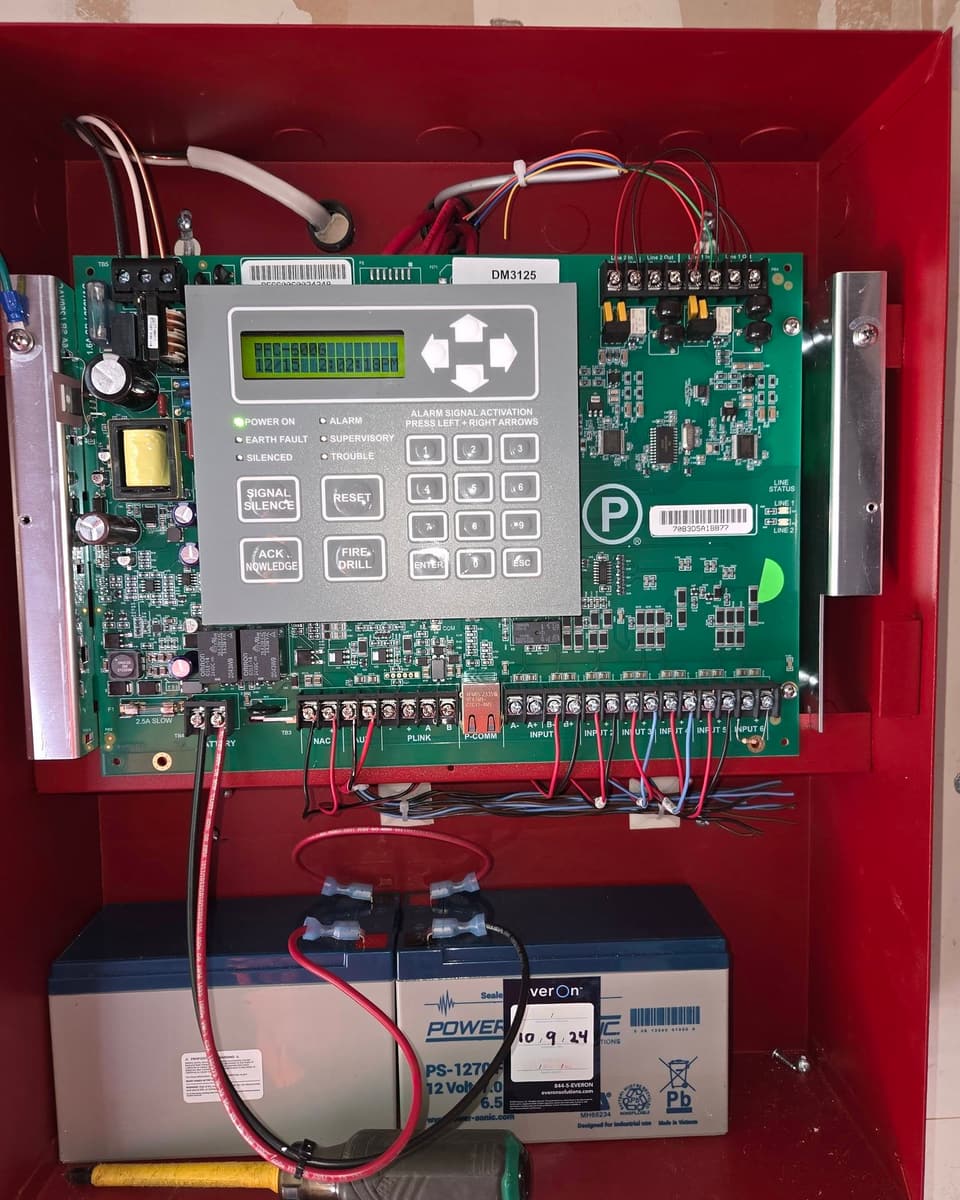
- The panel, its power supply and its standby batteries: what it is reporting, what is logged in it, and whether it still has the power to run the system when the building's own supply is gone.
- Initiating devices
- Smoke detectors, heat detectors and manual pull stations. Present, unobstructed and undamaged on inspection; on test, reporting to the panel as the right device in the right place.
- Notification appliances
- Horns and strobes, and whether they sound and flash where they are meant to, on the circuits meant to run them.
- The circuits between them
- Wiring faults usually show up as a trouble condition at the panel long before they show up as a device that will not work.
- Monitored systems
- If the system reports to a central station, say so when you book, because testing a monitored system has to be coordinated with the station. How monitoring works.
Inspection and testing is performed by Allen Lorscheider, who holds NICET Level II, Inspection and Testing of Fire Alarm Systems. NICET certifies individuals rather than companies, so that is his certification personally, not a company certification.
What you receive
A written report of what was tested and anything that did not pass.
Inspection and testing comes with one. You receive it in writing, for the building's file and for whoever asks to see it next.
It sets out what was tested and any deficiencies found, so that someone who was not there can read what the system did and what it did not do.
Keep it with the rest of the file: earlier inspection and test reports, any deficiencies and when they were corrected, service and repair records, and the system's original installation documents such as the record of completion. How long to keep records depends on the code edition and your jurisdiction, so keep them for the period your fire authority requires.
Requirements vary by jurisdiction, occupancy and system. Tell us where the building is and we can go through what your fire authority asks for.
Deficiencies
A deficiency is a finding, not a verdict.
It is a part of the system that did not pass: a device that failed its test, a battery that will not hold, a circuit reading a fault.
It is written down with what it is and where it is, so the correction can be recorded against it. The file should show the finding and the fix, not one without the other.
Correcting it is service and repair work. It can be the same company that found it or a different one. If a fire inspector or another contractor has already written up your building, send the notice with your request, along with any correction date on it.
Questions
How the schedule is set, and who carries it.
General answers. What applies to a given building depends on its jurisdiction, its occupancy and its system.
How often does a commercial fire alarm system have to be inspected and tested?
The schedule comes from NFPA 72, the National Fire Alarm and Signaling Code, which the California Fire Code adopts for fire alarm systems. It sets intervals by component rather than one interval for the whole system: visual inspections range from weekly to annual depending on the part, and many devices are on an annual functional test cycle. What your building needs depends on the equipment installed, how it is monitored, and the code edition your fire authority enforces. If you are not sure, we can review the system and propose a schedule.
Who is responsible for having it done?
Under NFPA 72 the property or building owner, or the owner's designated representative, is responsible for having the system inspected, tested and maintained. Owners usually hire a qualified fire alarm contractor to do the work and produce the reports, but the responsibility stays with the owner. Local fire authorities enforce the fire code and may ask to see the records.
What records should the building keep?
The California Fire Code requires that records of fire alarm inspections, tests and maintenance be kept. A working file holds each inspection and test report, any deficiencies and when they were corrected, service and repair records, and the original installation documents such as the record of completion. How long to keep them depends on the code edition and your jurisdiction, so keep them for the period your fire authority requires.
What happens if part of the system has to be taken out of service?
When a required fire protection system is out of service, the fire department and the fire code official are to be notified immediately, and where the fire code official requires it, the building evacuated or an approved fire watch provided until the system is restored. Facilities with an approved impairment management program are handled differently, and your fire authority is the one that says what applies to your building. Planned work is easier to manage than a failure, which is one reason to test on a schedule rather than on discovery. Tell us the hours the building can be worked in when you book.
Can you correct a deficiency another contractor wrote up?
Yes. We service systems other companies installed, and correcting a deficiency does not have to be done by whoever found it. Send us the notice, the panel make and model if you have it, and any correction date on the notice. What can be done with a particular panel depends on the equipment and on access to the manufacturer software and training, so tell us what the panel is and we will tell you plainly if it is something we cannot take on.
Request an inspection
Tell us about the building, and when it is due.
Send the basics and we will come back to you about what the system needs. If you are holding a deficiency notice with a correction date on it, say so and it will be worked into the answer.
Prefer to talk?
(831) 455-5858Phones are answered from 8am to 6pm. Ask about availability for your site when you call.